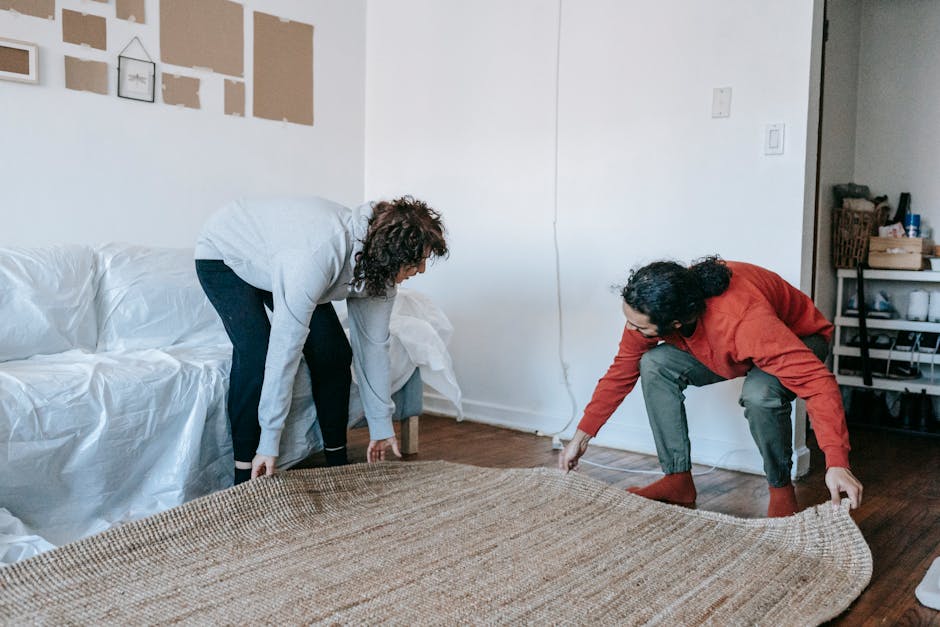
How much does bulky carpet disposal cost in W2?
If you are staring at a rolled-up old carpet in a hallway flat, a rental after move-out, or a renovation pile that's been sitting there a little too long, you're probably asking the same thing: How much does bulky carpet disposal cost in W2? The honest answer is that it depends on volume, access, labour, and how quickly you need it gone. In W2, where many homes and buildings have stairs, tight entrances, parking limits, and busy streets, disposal can be more involved than simply "put it out and hope for the best."
This guide breaks down the real cost factors, the practical process, and the smartest ways to avoid paying more than you should. You'll also find a simple step-by-step plan, a comparison of disposal methods, and the kinds of mistakes that catch people out. If you're planning a deeper clean or a move, it may also help to look at related services such as the wider cleaning service overview or our Paddington carpet cleaning service to see what can be handled before disposal becomes a bigger job than it needs to be.
Truth be told, carpet disposal sounds simple until you realise how awkward one heavy, damp, or dust-heavy carpet can be. Let's make it clearer.
Table of Contents
- Why bulky carpet disposal costs in W2 matter
- How bulky carpet disposal in W2 works
- Key benefits and practical advantages
- Who this is for and when it makes sense
- Step-by-step guidance
- Expert tips for better results
- Common mistakes to avoid
- Tools, resources and recommendations
- Law, compliance, standards, or best practice
- Options, methods, and comparison table
- Case study or real-world example
- Practical checklist
- Conclusion
- Frequently asked questions
Why How much does bulky carpet disposal cost in W2? Matters
Carpet disposal is one of those household jobs that seems low priority right up until it starts taking up space, trapping dust, or blocking a room during a move. In W2, the question is not only about price. It is also about convenience, timing, and how much effort you want to spend dragging a bulky item through a building that may not be especially forgiving.
For a lot of people, the real issue is hidden cost. A cheap-looking disposal option can become expensive if you have to pay for extra labour, missed collection slots, parking trouble, or repeat trips. And if the carpet is large, damp, glued down, or mixed with underlay, the job gets fiddly fast. That is where planning matters.
It also matters because carpets are rarely just "one item." A single room can produce more waste than expected once you add underlay, grippers, dust sheets, and offcuts. If you are coming out of a rental, renovating a flat, or clearing a space before new flooring goes in, the disposal choice can affect the whole project timeline. Nobody wants fresh flooring delayed by an old rolled carpet sat in the hallway. Not ideal.
There is another angle too: access in W2 can change the equation. Basement flats, mansion blocks, managed buildings, narrow staircases, and limited loading space all make bulky waste more time-consuming to remove. So the price is not just about the carpet itself, but the environment around it.
In short, knowing the likely disposal cost helps you budget properly, compare options, and choose the least stressful route.
How How much does bulky carpet disposal cost in W2? Works
Bulky carpet disposal usually follows a simple pattern: assess the waste, decide how it will be removed, arrange labour or collection, and then ensure it is handled responsibly. The cost is shaped by what needs moving and how hard the removal is likely to be.
Here are the main factors that influence price in W2:
- Volume and weight: A single room's carpet is very different from several rooms' worth of carpet plus underlay.
- Access: Ground-floor access is easier than a third-floor walk-up with tight turns.
- Parking and loading: In busy London streets, time spent finding a safe place to stop can affect the total.
- Condition: Wet, dusty, damaged, or badly fitted carpet can be more awkward to handle.
- Preparation: Carpets that have already been cut and rolled are quicker to remove than loose, sprawling material.
- Urgency: Same-day or short-notice removal usually costs more than planned collection.
Most readers want a practical range rather than a vague promise. Fair enough. While exact pricing varies by provider and property, carpet disposal costs in W2 are commonly influenced by whether the job is treated as a small one-off collection, part of a larger clear-out, or an assisted removal involving heavier labour. If the carpet is already bagged or rolled and easy to carry, the job is simpler. If the team has to lift, cut, and carry everything down multiple flights, expect the labour element to matter more than the waste volume itself.
For households or landlords planning a move, it can be useful to combine disposal with other cleaning tasks. For example, end-of-tenancy jobs often include a lot of "small but annoying" items that eat time. If you are in that situation, the guide to end of tenancy cleaning in Paddington may help you think through the order of work. And if the property is being fully refreshed, house cleaning support can make the space far easier to hand over or relaunch.
One practical point: disposal cost is often lower when the carpet is removed in a tidy, ready-to-go form. A bit of prep can save a surprising amount.
Key Benefits and Practical Advantages
The obvious benefit of bulky carpet disposal is getting the waste out of the way. But the practical advantages go further than that.
- More usable space: Rooms feel less cluttered immediately when old carpet and underlay are gone.
- Cleaner working conditions: Old carpet can shed dust, fibres, and trapped debris. Removing it can make refurbishment easier.
- Less trip hazard risk: Rolled or loose carpet in hallways is awkward and unsafe, especially in shared spaces.
- Faster renovation: New flooring can be installed without delays.
- Better end-of-tenancy presentation: Clean, cleared rooms tend to photograph and inspect better. Simple, but true.
- Reduced stress: There is a quiet relief in not having to think about where the carpet will go next.
There is also a financial angle. If you are comparing disposal options carefully, you may avoid paying twice for the same job. For instance, one team might handle removal, transport, and final disposal in one visit, while another might charge extra for upstairs access or separating underlay. Always ask what is included.
For business owners or landlords in W2, this can be especially useful when managing turnover. A fast clearance path keeps void periods shorter. And if you are dealing with an office or managed premises, the waste can sometimes be better handled as part of a broader service plan, which is where office cleaning in Paddington and domestic cleaning may be relevant depending on the property type.
Who This Is For and When It Makes Sense
Bulky carpet disposal in W2 makes sense for more people than you might think. It is not only for full refurbishments. Often, it is the result of a very ordinary situation: a room has been recarpeted, the old flooring is rolled up, and the owner now needs it gone without turning the week upside down.
This is especially relevant for:
- Homeowners replacing worn carpet with wood, laminate, or new carpet.
- Renters leaving a flat where old flooring needs to be cleared responsibly.
- Landlords preparing a property for new tenants.
- Property managers handling room refreshes or post-void clean-ups.
- Small businesses clearing reception areas, back offices, or partitioned spaces.
- People doing partial renovations who want the old material removed quickly and properly.
It can also make sense if you are already organising other work around the property. If you are buying, selling, or letting in the area, timing tends to be tight. The more you can streamline, the better. A useful local read is the home buying and selling guide for Paddington, which gives a feel for how property projects often move in overlapping stages. And if you are still deciding whether the neighbourhood is right for your lifestyle or investment, this overview of Paddington living is a sensible companion piece.
To be fair, even one awkward carpet can justify calling in help. Especially if you have no lift and the thing is heavier than it looks. It always is, somehow.
Step-by-Step Guidance
If you want a smooth carpet disposal process, the trick is to break it into stages. That keeps costs down and reduces the chance of last-minute complications.
- Measure what needs to go. Count rooms, estimate rolls, and note whether underlay and grippers are included.
- Check access honestly. Is there a lift? Can a vehicle stop nearby? Are there stairs, tight turns, or shared corridors?
- Separate materials where possible. Carpet, underlay, and adhesive residue may be handled differently depending on the service.
- Prepare the carpet. Roll it tightly, tape it securely, and keep pieces manageable.
- Ask what the quote includes. Labour, parking time, loading, and disposal fees should all be clear.
- Book the right slot. Choose a time when access is easiest and the property is not busiest.
- Confirm disposal handling. You want the waste taken away responsibly, not left in a pile on the kerb.
Here is a useful real-world rule: if you can walk the route from the carpet's location to the vehicle without thinking too hard, the job is probably straightforward. If you find yourself saying, "Well, technically it can be done, but..." then the labour element is going to matter.
A small aside from experience: the most time-consuming jobs are often the ones where everything is almost easy. Almost ground floor, almost enough parking, almost ready to go. That "almost" is where costs creep up.
If you are already planning cleaning around the same time, a coordinated approach tends to be more efficient. Our pricing and quotes information is a useful next stop if you want to understand how service scoping usually works before you commit.
Expert Tips for Better Results
There are a few small things that make a surprisingly big difference when disposing of bulky carpet in W2.
- Remove loose debris first. Sand, dust, and old nails make the carpet harder to carry cleanly.
- Cut large pieces before moving them. Smaller rolls are easier to handle on stairs and through doorways.
- Keep materials dry. Wet carpet is heavier, smellier, and less pleasant to move. Nobody wants that.
- Check building rules early. Some blocks have specific access or waste handling requirements.
- Ask about insurance. If the removal involves shared hallways or tight access, this matters more than people think.
- Schedule around traffic. In W2, a sensible collection time can save a lot of waiting.
Another useful tip is to bundle related jobs together. A carpet removal team may need only one visit if you plan the stripping, hauling, and final clearance in a single appointment. That usually works better than stretching the task across several days. Less back and forth. Less friction.
If the carpet came from a home with sofas, cushions, or other soft furnishings needing attention, you might also want to look at upholstery cleaning in Paddington. It is not directly related to disposal, but in practice these jobs often sit beside each other during a refresh.
Common Mistakes to Avoid
Most carpet disposal headaches come from the same few mistakes. Luckily, they are easy to avoid once you know them.
- Not checking the access route. A carpet that looks manageable in the room can become awkward in a stairwell.
- Leaving everything to the last minute. This is the big one. Rushed bookings cost more and create stress.
- Assuming all waste is priced the same. Carpet, underlay, tack strips, and mixed waste may not be treated equally.
- Forgetting about parking constraints. In W2, loading time can be a hidden cost.
- Not asking whether disposal is included. A cheap collection quote can become less cheap once extras are added.
- Overestimating what you can move alone. Plenty of people try. Many regret it by the first corner.
Another mistake is overlooking the bigger property plan. If the carpet is being removed because a tenancy is ending or a property is being handed back, the disposal should fit the rest of the schedule. That is where a structured service approach matters, especially if the site also needs a final clean. A quick look at health and safety guidance can also help you think through safe handling in shared spaces.
The short version? Don't assume the easiest part of the project will stay easy. Carpets are sneaky like that.
Tools, Resources and Recommendations
You do not need a warehouse full of equipment to deal with bulky carpet disposal, but the right basics help a lot.
- Utility knife or heavy-duty cutter: For safe trimming into manageable sections.
- Strong tape: Useful for securing rolled carpet so it does not unravel mid-carry.
- Gloves: Protect your hands from dust, rough backing, and hidden staples.
- Dolly or trolley: Helpful when moving multiple rolls through flat surfaces or loading areas.
- Dust sheets or plastic wrap: Keeps fibres from spreading through the property.
- Measuring tape: Good for estimating how much material you are actually removing.
For broader planning, it helps to think in terms of service pairing. If the carpet is part of a larger home reset, browse the Paddington blog hub for related local guidance, or review the services overview to see how different tasks might fit together. That can save time and, frankly, a bit of mental clutter.
One recommendation worth repeating: always get clarity on what happens after collection. The smoothest jobs are the ones where nobody has to guess what "disposed of" actually means.
Law, Compliance, Standards, or Best Practice
For carpet disposal, the main thing is to ensure waste is handled responsibly and in line with normal UK waste expectations. If you are using a professional service, you should expect sensible handling, proper transport, and clear communication about where the waste is going. You do not need every technical detail as a customer, but you do need confidence that the material is not simply being dumped somewhere inappropriate.
In practical terms, good practice usually means:
- Waste is collected and transported safely.
- Shared areas are protected during removal.
- Any hazards are identified before the job starts.
- Quotes are transparent about labour and disposal handling.
- Insurance and safety arrangements are available where relevant.
If you are a landlord, agent, or property manager, this matters even more because disposal decisions can affect handover standards and tenant expectations. It also makes sense to check terms, payment arrangements, and safety procedures before booking. For that, pages like insurance and safety, payment and security, and terms and conditions are worth a careful read.
Best practice is simple: be clear, be prepared, and don't leave disposal to guesswork. It saves hassle later.
Options, Methods, or Comparison Table
There are a few common ways to deal with bulky carpet disposal in W2. The best option depends on your budget, access, and how much hands-on work you want to do.
| Method | Best for | Pros | Watch out for |
|---|---|---|---|
| DIY disposal | Small jobs, easy access, one or two rolls | Lowest direct cost, full control over timing | Heavy lifting, transport hassle, time-consuming, parking issues |
| Assisted collection | Medium jobs, awkward access, limited vehicle access | Less lifting, more convenient, quicker turnaround | Labour and access may increase the price |
| Full-service removal | Large clear-outs, multiple rooms, tenancy changes | Most convenient, best for busy households or landlords | Usually the highest upfront cost |
| Combined clean-and-clear package | Moves, refurbishments, end-of-tenancy jobs | Efficient scheduling, fewer suppliers, easier handover | Needs good planning to avoid overlap or delays |
In practical terms, DIY looks cheapest on paper, but once you factor in time, vehicle hire, lifting effort, and the possibility of making a mess in a shared block, the numbers can change. A full-service route may cost more upfront, yet feel cheaper by the time the job is actually done. That trade-off is often the real decision.
If you are comparing local support, the page on carpet cleaning near Paddington Station W2 is also useful context, especially when disposal and cleaning need to happen around the same schedule.
Case Study or Real-World Example
Here is a realistic example from a typical W2 setting.
A tenant in a third-floor flat needed to remove a large living room carpet and underlay after a tenancy ended. The building had a narrow staircase, limited stopping space outside, and a shared hallway that needed to stay tidy. The carpet was already cut into sections, but the underlay had soaked up dust and was heavier than expected. What looked like a quick job became more involved once carrying and loading were factored in.
At first glance, the owner assumed the disposal would be a simple low-cost pickup. In practice, the access issues and labour made the quote more realistic than cheap. The best saving came from preparation: the carpet had been rolled, tied, and separated in advance, which reduced handling time. The result was a faster collection and less disruption to neighbours. Small thing, but it mattered.
That is usually how it goes in W2. The final cost is rarely just about the carpet. It is about the building, the timing, and whether the job has been made easy for the people carrying it out.
Practical Checklist
Use this checklist before booking carpet disposal:
- Measure the carpet area and confirm how many rolls or bundles there will be.
- Check whether underlay, grippers, and offcuts are included.
- Inspect the access route from the room to the vehicle.
- Confirm whether stairs, lifts, or parking restrictions apply.
- Ask if labour, disposal, and loading time are included in the quote.
- Prepare the carpet by cutting, rolling, and taping it securely.
- Clear the route of obstacles and fragile items.
- Book a collection time that suits building access and traffic conditions.
- Check whether insurance and safety arrangements are in place.
- Keep any relevant building or tenancy instructions to hand.
If you can tick most of those off, you are in good shape. If half of them are still unknown, pause and get clearer information first. That little bit of admin can save a lot of grief later on.
Conclusion
So, how much does bulky carpet disposal cost in W2? The answer depends on size, access, labour, urgency, and how prepared the job is before anyone arrives. A neat, ground-floor job will usually sit at the lower end of the scale, while a multi-roll removal from an upper-floor flat with awkward access will naturally cost more. That is normal, not a problem.
The best way to keep costs sensible is to plan early, prepare the carpet properly, and ask clear questions about what is included. In W2, where buildings and access conditions vary so much, the details matter more than people expect. Get those details right and the whole process feels lighter, quicker, and far less stressful. Which, let's face it, is what you wanted in the first place.
If you are comparing options, a clear quote and a sensible plan will almost always beat a rushed decision. And if you want support across the wider property clean-up, there are helpful resources throughout this site to guide the next step.
Get a free quote today and see how much you can save.
Frequently Asked Questions
What affects the cost of bulky carpet disposal in W2 most?
The biggest factors are the amount of carpet, access to the property, parking or loading restrictions, and whether the carpet has been prepared for removal. Labour often matters more than people expect.
Is carpet disposal more expensive in flats than houses?
Usually, yes. Flats often involve stairs, lifts, shared corridors, and tighter access, all of which can add time and effort to the job.
Can I save money by cutting the carpet myself?
Often you can. Cutting and rolling the carpet into manageable sections usually makes collection easier and may reduce labour time. Just use proper care and tools.
Do I need to remove underlay as well?
It depends on the job and the service you choose, but underlay is usually best removed separately so the quote is accurate and the waste can be handled correctly.
How do I know if a quote is fair?
Ask what is included: loading, labour, disposal, access, and any parking-related costs. A fair quote should be clear and specific, not vague.
Can bulky carpet disposal be done on the same day?
Sometimes yes, if access is straightforward and the provider has availability. Short-notice bookings can cost more, though, so it is better to plan ahead where possible.
What happens if the carpet is wet or dirty?
Wet or heavily soiled carpet is usually heavier and harder to handle. It may also need extra care during removal, which can affect cost and timing.
Is it better to hire a full-service removal team or do it myself?
If the carpet is small and access is easy, DIY may work. For larger jobs, upper floors, or tight schedules, full-service removal is often less stressful and more reliable.
Can carpet disposal be combined with cleaning?
Yes, and that is often a sensible approach for moves, refurbishments, or end-of-tenancy work. Combining tasks can reduce disruption and keep the property on a cleaner schedule.
What should I ask before booking carpet disposal in W2?
Ask about labour, disposal, access, parking, insurance, timing, and whether underlay is included. Clear questions up front usually prevent extra charges later.
Do I need to worry about building rules in W2?
Yes, especially in managed blocks or shared buildings. Access times, waste handling, and hallway protection can all matter, so it is worth checking before the job starts.
How far in advance should I arrange disposal?
As early as you can, especially if your building has restricted access or you are working to a move-out deadline. A little planning goes a long way.
Where can I find more information about local cleaning and removal services?
You can explore related local guidance through the blog hub or review the services overview for the most relevant next step.